
There is no single “best” choice—it depends on your operating environment, equipment type, and overall cost priorities. Below is a side‑by‑side comparison to help you decide.
1. Solid Tires
Best for: Heavy‑duty, continuous operation with high loads, frequent turning, and demanding conditions.
Advantages
High safety: There is no risk of tire blowout, eliminating safety incidents and equipment downtime caused by tire blowouts.Excellent puncture resistance
Resistant to puncture: Will not be punctured by scattered steel strips, iron filings, or crushed stones in the port.
Maintenance-free: No need to check tire pressure, no need for tire repair, reducing the daily maintenance workload.
Longevity stability: The performance degrades slowly before reaching the limit of wear, and its service life is usually longer than that of pneumatic tires.
Disadvantages
Poor shock absorption: The vibration is more noticeable when the road surface is uneven, and it may have certain impacts on the equipment's structural components (such as the axle and frame) in the long run.
Higher initial cost: The price for a single purchase is usually higher than that of the same specification pneumatic tires.
Difficult installation: Professional equipment and technicians are required, and the replacement process takes a long time.
2. Pneumatic Tires
Best for: Applications involving some road travel, mixed duty cycles, or where operator comfort is a priority.
Advantages
Comfortable: The tire body has excellent elasticity, which can effectively absorb road vibrations, protect equipment components, and reduce driver fatigue.
Large contact area: It shows excellent grip and stability, especially on slippery roads.
Low initial purchase cost: The price per tire is more advantageous compared to solid tires.
Disadvantages
Risk of tire blowout: Tire blowout may occur under heavy loads, when the tire pressure is abnormal, or when hitting sharp objects, posing safety hazards.
High maintenance requirements: Daily tire pressure checks are necessary, and tire inflation needs to be replenished regularly, with a risk of puncture.
Poor adaptability to working conditions: It is prone to being cut or punctured in storage areas with a lot of steel belts and iron filings, leading to premature.
3. Our Recommendation
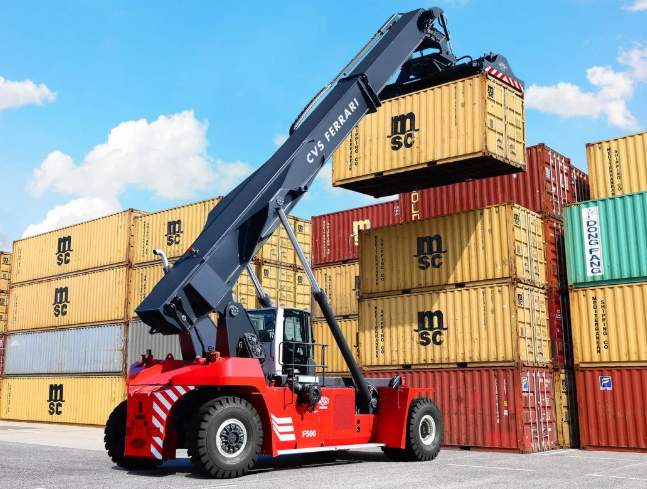
For reach stackers and empty container handlers—the core workhorses of a port—solid tires are the industry standard for two main reasons:
Maximized uptime: No blowouts or flats means unplanned downtime is virtually eliminated.
Built for the job: Frequent high‑load turning and debris‑strewn yards play to the strengths of solid tires, while these same conditions cause accelerated wear and failures in pneumatic tires.
 Who is SUNDOM TYRE ?